
By Tina Krasniqi
Just a short ride away from Sorrento; if you are not traveling with a class of 30 people, you’ll find Ercolano. Ercolano is home to thousands, and is a city rooted from wealth and disaster. What first seemed like a simple day trip, quickly turned into a dive into the many layers of history of Ecolano
How Ercalano was Explored Through The History of the Mafia offered at Sant’anna Institute
The day started by meeting my History of the Mafia class at 8:30am at the Sorrento train station for our 8:50 train. What should have been simple turned into multiple role calls and lots of waiting. More waiting than exploring. Our chaperone had all of our tickets and we needed to validate them individually before boarding. Some classmates were late, and by the time we departed, we had taken attendance about 3 times.
We took the train from Sorrento towards Naples and got off at Torre Annunziata. When we got there we switched platforms and waited 35 minutes for the rest of our classmates who were not there at 8:30. At one point, two of my peers boarded a different train, leaving the rest wondering if they were ahead of us or completely lost. Eventually, everyone reunited and continued the trip together.
The Circumvesuviana train experience
The Circumvesuviana train is different from what I am used to in the United States. The windows are open, the ride is shaky, and the scenery constantly changes between underground tunnels and views above ground. Although the journey was long and confusing, the train ride offered a different view from Sorrento.
Arriving at Ercolano with my class
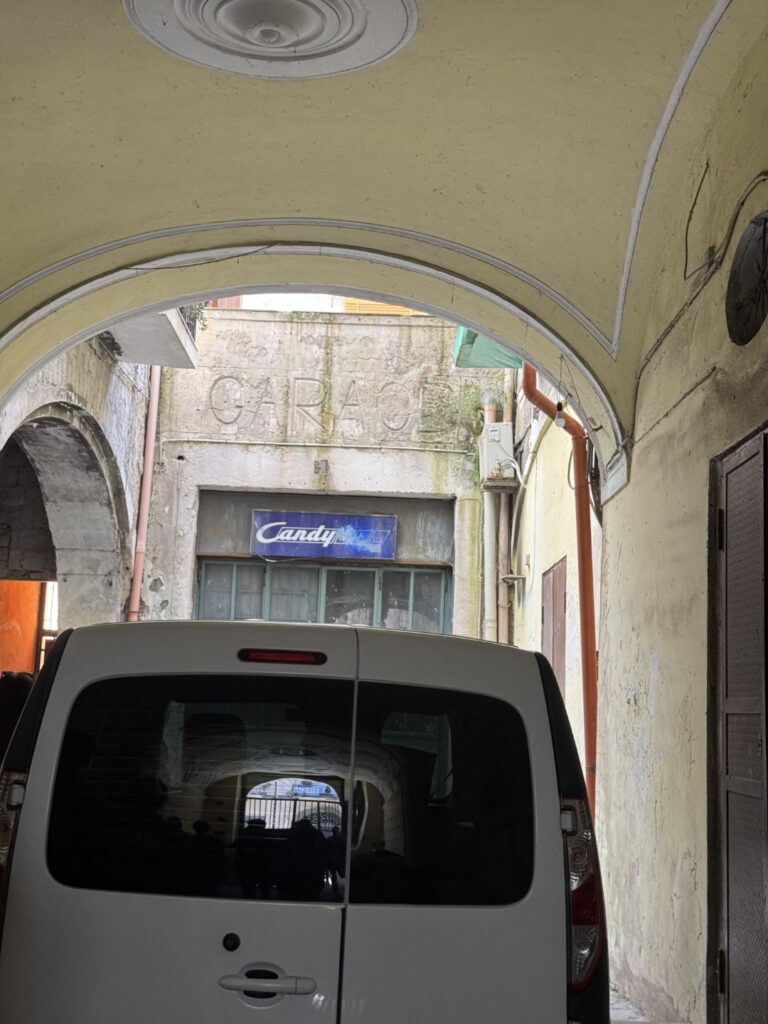
When we finally arrived in Ercolano, we walked through streets lined with cafes and small businesses before making our way towards the archaeological site. Walking with thirty students was almost an attraction itself. We found ourselves constantly blocking sidewalks and apologizing to people trying to get past us.
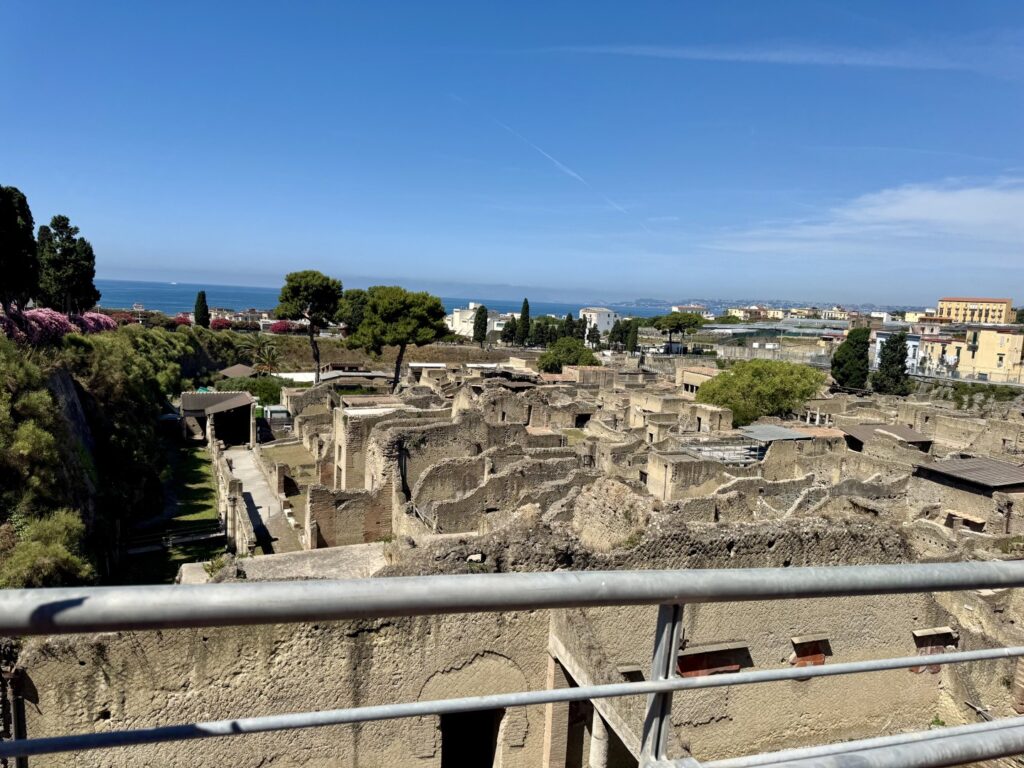
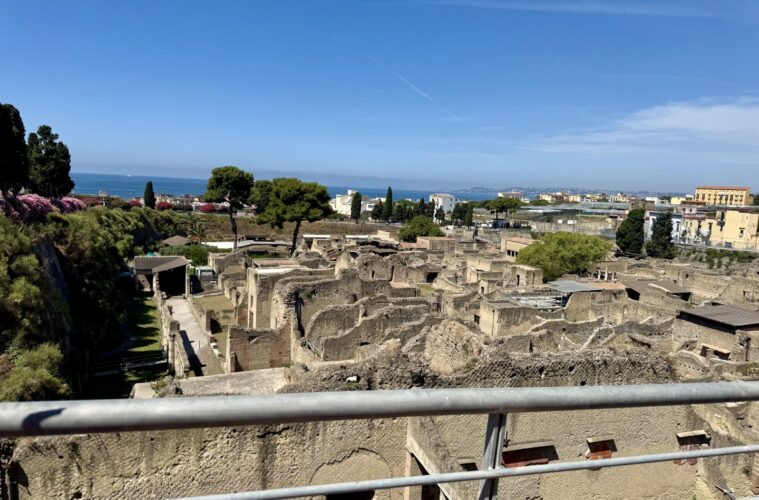
From an elevated platform, we looked down at the ruins of ancient Herculaneum. This was cool. Many of my classmates were surprised because we did not expect to see them. The ancient Roman town, otherwise known as Herculaneum, was destroyed in 79AD when Mount Vesuvius erupted. Unlike Pompeii, Herculaneum was buried under layers of volcanic mud and ash which preserved the buildings. Archaeologists first believed the city was abandoned, but later they discovered hundreds of skeletons near the shoreline, waiting to be rescued. The coast was their only escape but as they waited many of them died instantly from the pyroclastic flows that swept down the mountain.
Although we did not walk through the ruins, standing above them and hearing their history it felt like we did. It was crazy to imagine an entire city that remained hidden beneath the ground for centuries. It makes me wonder if there’s more cities that haven’t been discovered yet.
Radio Sinai
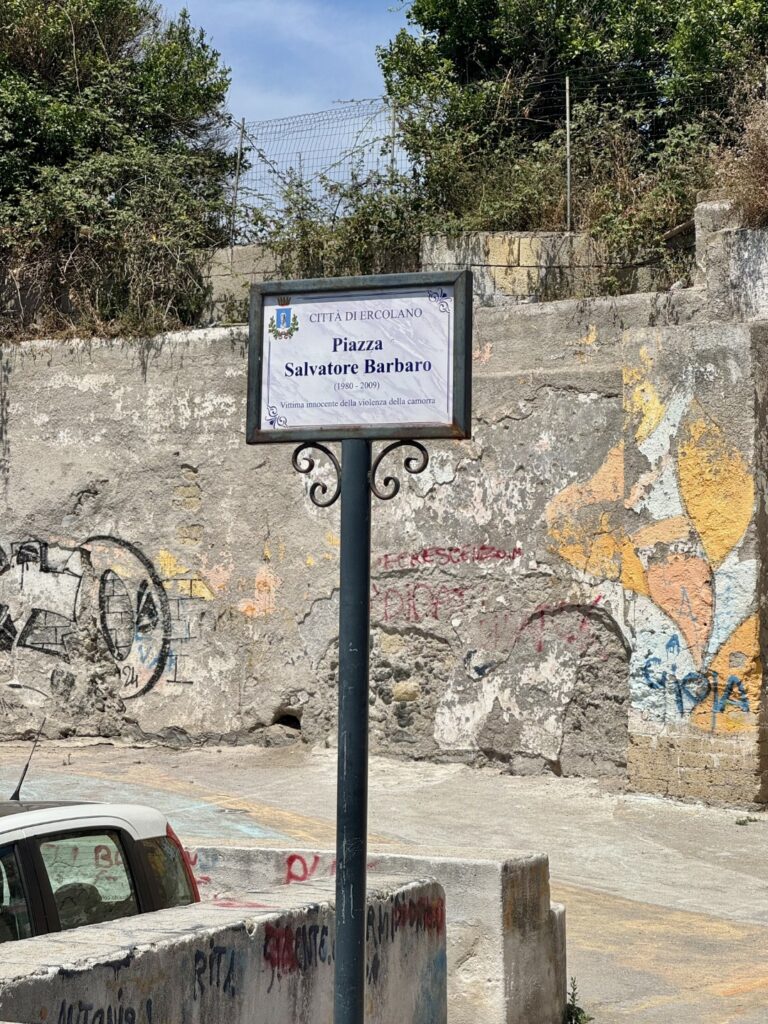
After leaving the ruins, we walked about fifteen minutes to Radio Sinai. Today, the building serves as an anti-mafia radio station, but it once belonged to Giovanni Birra. Giovanni Birra was a boss of the Camorra, a criminal organization that operated throughout the Naples area. The station opened in 2009 and was created by residents of Ercalano who wanted to promote stories about culture and community instead of violence and organized crime.
The station is named after Giancarlo Siani, an investigative journalist who was murded by the Camorra in 1985 at only twenty-six years old. He had spent years reporting on organized crime and local politics. His work exposed connections that some people wanted to keep hidden. Even though decades have passed since his death, his name continues to represent journalism and resistance against organized crime.
Walking into the building felt eerie. Before reaching the studio, many of my peers wondered about the people who had once lived there and how different the atmosphere must have been when the property belonged to the mafia boss. Upstairs, however, the mood changed. What once had been associated with crime had been transformed into a place dedicated to education and community. In many ways, that transformation reflected Ercolano itself; a city that has repeatedly rebuilt and reinvented itself throughout history.
Later, we returned to the museum, where lunch was prepared by a local organization. After spending the day learning about destruction and violence, ending with hospitality felt fitting. Ercolano’s story is not only about the eruption of Mount Vesuvius or the influence of the Camorra, it is also about the people who continue to shape the city today.
The trip back to Sorrento was just as chaotic as the journey there. More confusion over platforms sent us crossing bridges and changing directions. By the end of the day, keeping thirty students together felt like an accomplishment of its own. Yet somewhere between the missed trains, repeated roll-calls, ancient ruins, and anti-mafia activism, Ercalano revealed itself as more than a stop along the railway. It became a place where history is not locked away in museums, but woven into everyday life.