

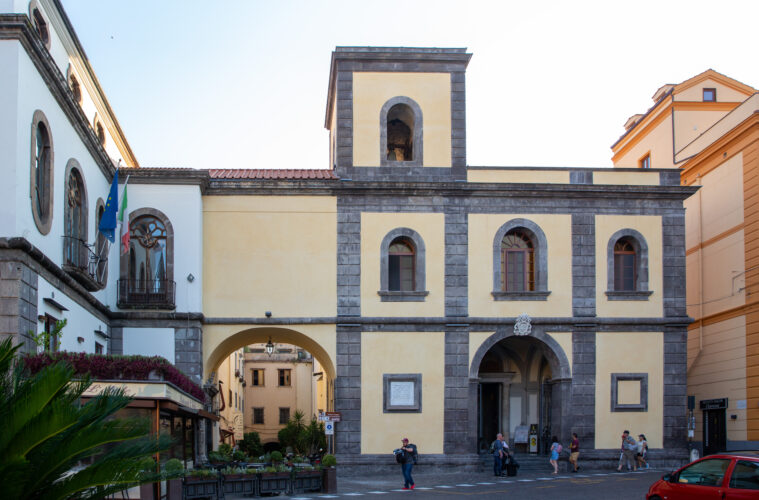
Just a short walk from the central Piazza Tasso, is the Basilica of Sant’Antonino (11th century), a genuine emblem of profound faith and widespread religious devotion.
The people of Sorrento hold deep affection for this church as it is dedicated to the same patron saint, whose remains are preserved here.
Sant’Antonino is associated with several miracles that have fueled widespread religious sentiment.
Among them is a renowned tale of a child rescued from the jaws of a shark through the saint’s intercession.
As evidence of this miracle, just at the main entrance of the basilica, you’ll find the whale bones believed to be linked to this extraordinary event.
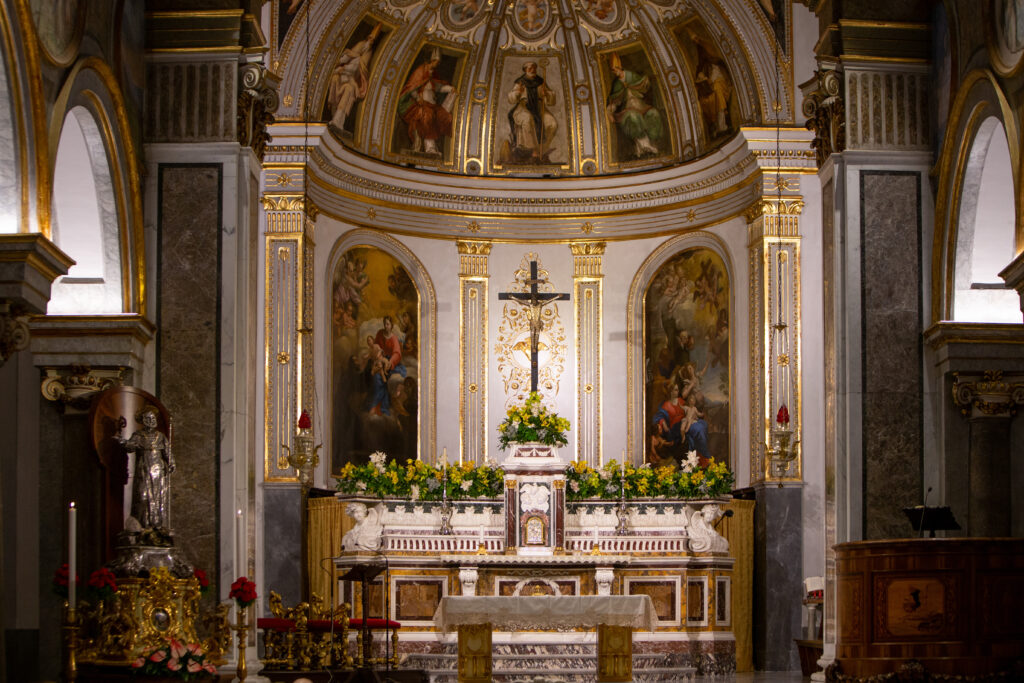
Being among the oldest basilicas on the Sorrentine Peninsula, the Basilica of Sant’Antonino has consistently been a pilgrimage destination.
On either side of the main altar, two artworks house a wealth of saintly Relics.
On the feast day, February 14th, a multitude of individuals gather to pay homage to Sant’Antonino’s remains in the crypt, underscoring that certain expressions of religious affection endure despite the passage of time.
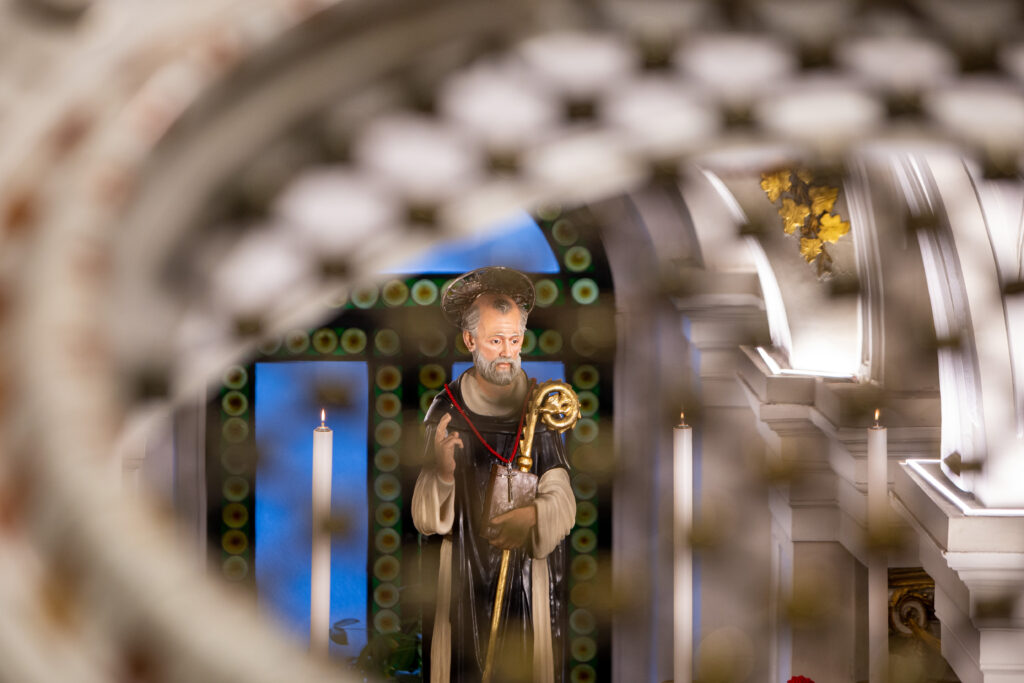
Moreover, on the festive day, the entire city participates with fervent devotion in the procession winding through the main streets of the town.
The procession, featuring representatives from the Confraternities and Archconfraternities of Sorrento, religious dignitaries, and the Municipal Administration, parades the silver statue depicting the patron saint.
Architecture of the Basilica
The Basilica of Sant’Antonino Abate is not only a central place of worship for the faith of the Sorrento people, but also one of the most interesting buildings from an architectural and historical point of view in the entire Sorrento Peninsula. Its structure is the result of centuries of stylistic evolutions and expansions, which reflect the long religious and artistic history of Sorrento.
Origins of the Basilica of Sant'Antonino
The origins of the basilica date back to the 9th century, when a small oratory was built on the site in correspondence with the tomb of Sant’Antonino; over the following centuries, especially starting from the 11th century, the oratory was expanded to become a larger church, with a basilica layout with three naves separated by twelve marble columns.
The internal columns, variously sculpted, most likely come from ancient Roman villas present in the area, a typical practice of the medieval period that combines historical continuity and reuse of ancient materials
The facade
The facade of the basilica has a marked Romanesque influence, with the use of gray tuff and a portico that leads into the interior of the church. The bell tower, integrated into the façade, is an iconic element that contributes to the recognisability of the building in the urban landscape of Sorrento.
Although the medieval origins are clearly visible, subsequent interventions over the centuries, particularly in the 17th and 18th centuries during the Counter-Reformation period, introduced Baroque decorations and details which enrich the overall architectural interpretation of the building
Interiors and decorations
Inside, the basilica develops on a longitudinal plan with three naves. The ceiling of the central nave is characterized by painted coffered gaps, with paintings by 18th century artists such as Giovan Battista Lama in the center, which depict episodes linked to the life of the saint.
Among the works of art present there are also paintings by Giacomo del Po, which celebrate miraculous events linked to the protection of Sorrento from plagues and sieges, and a series of narrative frescoes illustrating the miracles of Sant’Antonino.
Crypt and Sacristy
Under the apse is the crypt, called “succorpo“, one of the most evocative and visited spaces of the basilica. The lower room, accessible via marble stairs, is supported by columns and preserves the remains of the saint, as well as numerous votive offerings and testimonies of popular faith.
In the crypt there are also paintings by Carlo Amalfi depicting the patron saints of Sorrento, together with works of great historical and artistic value.
The sacristy of the basilica is considered a true museum of sacred art, where objects, paintings and sculptures that tell the story of the centuries-old devotion towards Sant’Antonino are kept. Among these, there is a silver statue of the saint, sacred paintings from different eras and an eighteenth-century nativity scene of considerable value.