

When tourism rises, how do you keep culture alive?
By Tina Krasniqi
Sorrento, Italy – To many visitors, Sorrento is known for lemons, the sea, and a connecting point to the Amalfi coast. But for Gaetano Mauro, the city is transactional. While art and history are important to Sorrento, so is business.
Meet the Locals of Sorrento: Gaetano Mauro and the Business of Preserving History
Gaetano Mauro, an entrepreneur and president of the Correale Museum of Sorrento, has spent most of his career in finance and tourism, not museums. Born and raised in Sorrento, Mauro built his career as an accountant before opening his first business at twenty one years old. Over the years, he expanded his business to include hotels and restaurants, developing a reputation as a businessman. In 2010, that experience led to an unexpected opportunity where he was selected to join the museums council. Seven years later, he was elected as president of the Correale Museum.
“I’m a businessman,” Mauro said. “I don’t know anything about museums.”
Although Mauro did not come from an artistic or historical background, his experience with business, organization, and finance would become one of the musume;’s greatest strength.
How Mauro became President
Mauro joined the museum’s governing council in 2010 after being selected to represent the city of Sorrento. The museum is managed by a private foundation whose leadership includes representatives connected to cultural institutions and the city government.
At the time, Mauro said the mayor believed his experience made him the right person to help the museum, despite Mauro’s initial curiosity of how a businessman would fit into a cultural institution; he persevered and changed the trajectory of the museum.
Once he began working with the museum he saw that it already had people with an extensive knowledge of art, history, and preservation. What it lacked was someone who understood marketing, organization, and long term financial planning.
Mauro began learning from the museum’s cultural experts while applying the business skills he had developed.
“It became something like a marriage between culture and industry,” he said.
In 2017, Mauro became president of the museum. His role was not to simply oversee its collections but to help ensure that the institution could remain open, and could be financially stable to future visitors.
About the Correal Museum
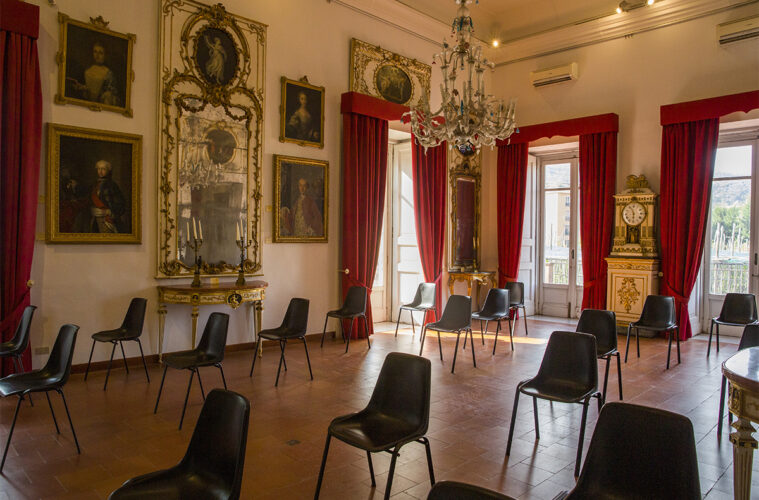
The Museo Correale di Terranova is housed in a historic villa in Sorrento, and has welcomed the public for more than a century. Its collections were formed through the Correale family. The museum features 24 exhibition rooms spread across four floors, showcasing collections that span from the 15th century through the 19th century. Visitors can explore paintings, porcelain, archaeological artifacts, decorative arts, and historic furnishings. The museum is surrounded by a garden that leads visitors towards one of its most recognizable features – a panoramic terrace overlooking the sea. Mauro described the view as one of the qualities that separates the museum from many other cultural spaces.
“I hope that visitors can understand that they’ve been in a place that is very important,” he said,
“I hope that they keep something of our culture and take something of our culture with them”
Saving the Museum
When Mauro first joined the museum council, the institution was struggling.
He recalled seeing a newspaper article suggesting the museum could close. Only about 8,000 people were visiting annually, few activities were being organized, and the museum had limited ways to generate income
Mauro began examining how the museum operated and where changes could be made
One of his first priorities was extending the museum’s opening hours; he contacted universities and explored partnerships that would allow students to gain experience while also helping the museum remain open later in the day.
He then worked to introduce new uses for the museum’s weddings that were permitted on the property. Music performances were organized and spaces were rented for events. Contracts connected to museums. Properties were reviewed, and new sources of income were developed.
Mauro believe the museum could no longer depend only on inconsistent public funding
“We cannot wait for other people to give us money,” he said. “We have to earn our own money. We have to organize like an industry.”
Over time those changes increased both the museum’s visibility and its attendance. Mauro said the number of people coming through the museum for visits, wedding, music, and other events grew from roughly 8,000 annually to around 35 -40,000 guests annually.
The increase allowed the museum to continue operating, invest in new projects, and reduce the risk of closure.
For Mauro, the numbers are not separate from the museum’s mission; they will allow the mission to continue.
Where business meets culture
Mauro’s approach has occasionally faced criticism from people who believe a museum should not be managed like a business
He understands the concern, but believes culture cannot survive without financial stability.
“You cannot do good without money,” he said
Rather than treating art and business as opposing forces, he sees them as partners. The museums cultural experts, protect the artistic and historical value of its collection while business strategies provide the resources needed to preserve them
One example is a restoration sponsorship initiative he developed through the program’s private businesses. Donors can finance the restoration of a specific painting in return the museum, recognizes their contribution, and gives them an opportunity to share their support publicly
Before joining the museum, he said only a small number of paintings had been restored over years. Through sponsorships and private funding the museum was able to restore around 30 paintings with an a shorter period
During the interview, he discussed a restoration project costing approximately €20,000 that was being funded by a local hotel. Past buyers were able to observe the restoration process and see details gradually reappear beneath the years of darkness and damage
The program benefits both sides. The museum receives funding for preservation while participating businesses become publicly connected to the protection of local culture.
Mauro has also worked to secure, larger grants in public funding for major projects, including the development of a new, archaeological area
His goal is not to commercialize the museum or a place. It’s for cultural purposes. Instead, he wants to create enough financial support to protect that purpose.
Giving back to Sorrento
Mauro’s commitment to the museum is also personal
He describes his work there as a mission and a responsibility to the city where he was raised, and where he built his career
“Sorrento means a lot to me,” he said. “Sorrento is my town and I love my town.”
Mauro said his wife sometimes asks why he gives so much of his time to the museum instead of focusing only on companies. He explained that they are already organized and supported by employees who understand their responsibilities. The museum, however, needs people willing to give ideas
Mauro credits Sorrento’s tourism industry with creating the opportunity that allowed his own business to succeed because this is supporting his career. He believes he has an obligation to return something to it.
“If I am an important businessman here in Sorrento it is also because I live in Sorrento.” He said “Sorrento gives me the opportunity to be a businessman, so why not give something back to my town?”
For him giving back does not only mean donating money it means using his experience to strengthen an institution that belongs to the community
He also wants local residents to recognize the value of the museum. He said people often travel to famous museums in New York, London, Madrid, or other major cities while overlooking cultural spaces in their own hometown.
The Coral Museum offers free admission to local residents, but he said many still do not visit. He hopes future projects will encourage more people from Sorrento to see the museum as part of their everyday community rather than only as a place for tourists.
One idea is to create a café experience where residents can enjoy a cappuccino and a brioche before or after visiting the collections. He believes a more relaxed and social environment could introduce the museum to new people who might not otherwise enter
Looking toward the future
Although the museum is dedicated to preserving the past, he does not believe it should remain frozen
He wants to include guided tours, audio, guide, QR codes and other tools to help make the collections easier to understand. He also hopes to create experiences that combine art gardens, the Terrence and nearby local businesses.
One possible tour could connect the museum’s cultural history with Sorrento’s lemon, growing tradition and local food
He is especially interested in attracting younger visitors and people who may not already consider themselves interested in art
“We have to make the museum loved by the young generation in a different way. We have to match the old and the new,” Mauro said
For him changing how people enter and experience the museum does not mean abandoning its identity. It means creating a new path towards history already inside.
Sorrento beyond the postcard
His vision for the museum reflects his wider concerns about the city
He has watched the cities, tourism in industry changed dramatically throughout his life, and he began working in hospitality. Reservations were completed through letters, telephone calls, and later fax machines. Communication was slow and visitors expected fewer services.
Technology has made tourism faster and more efficient but also more demanding.
Sorrento has also experienced major tourism growth. He supports tourism and recognizes how important it is to be to the local economy, but believes the city must manage that growth carefully.
He worries about traffic overcrowding and the possibility of tourism becoming incompatible with daily life for residents. His goal is not to stop people from visiting or prevent young entrepreneurs from entering the tourism industry. Instead, he wants Sorrento to grow away from remaining livable, organized and connected to its identity.
He believes visitors are searching for more than a famous destination. They also want authentic experiences, local food, garden history, and simple, simple moments that reveal how people and Sorrento live.
He grew up as the son of a farmer, his family, cultivated, lemons, oranges, and olives, and he worked in the garden with his father before entering the hospitality industry as a teenager
He remembers travelers visiting the garden, sitting with his father, drinking fresh lemonade, and picking fruit from the tree. Those simple interactions allowed visitors to connect with local life in a way that went beyond traditional sightseeing.
Although Sorrento may be known internationally for lemons and coastal views, he hopes visitors, also discovered the people tradition and history behind those symbols
Preserving the past
Through his work at the Coreale museum, he has learned more about art history than he expected. He said, working alongside cultural experts has changed the way he thinks and gives him knowledge. He did not have it when he first joined the council.
He sees the continued learning as one of the most valued powerful valuable parts of the experience
There is always something that I can learn from other people by looking and by studying, he said
That belief also shapes how he views the museum’s responsibility to the younger generation
The institution preserves painting objects in historical spaces, but he believes its larger role is to help people understand how earlier generations lived, worked and built the city.
“If you forget your past, you are not able to organize your future,” he said
For him preserving the museum is not simply about protecting old artwork. It’s about keeping Sorrento’s history visible while finding new ways for people to
His approach may have begun with business, but his goal extends far beyond numbers by combining cultural, financial sustainability and community responsibility. He is working to ensure the museum remains the only part of San’s pass, but also part of its future.