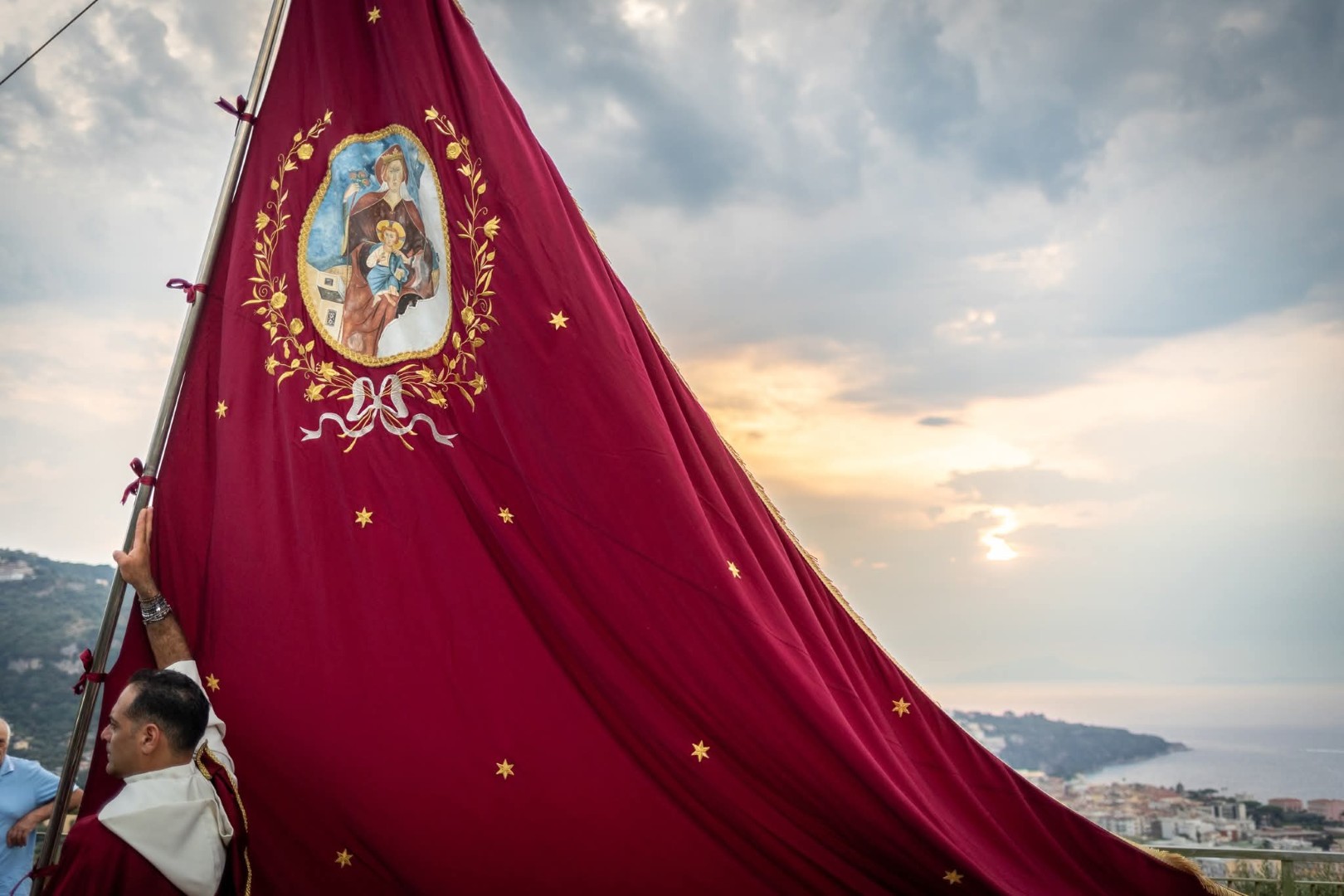

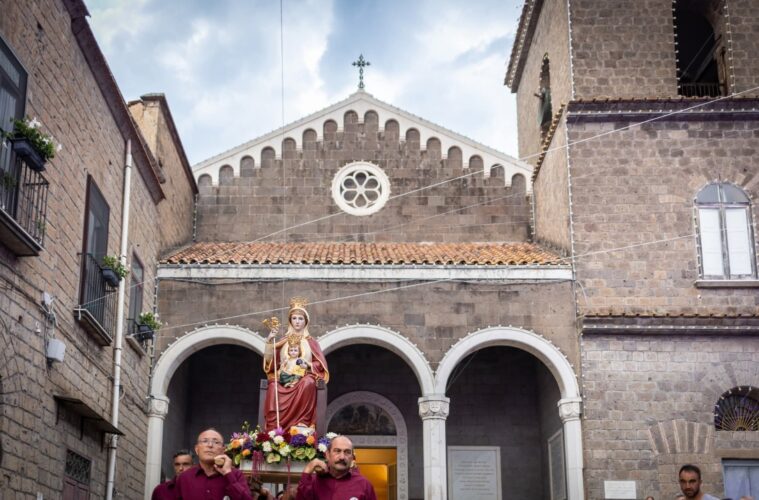
Among the most evocative places of worship on the Sorrento Peninsula, the Church of the Madonna di Casarlano—also known as the Church of Santa Maria di Casarlano—stands as a key focal point for Marian devotion in Sorrento. Located in the hilltop hamlet of the same name, it houses an ancient image of the Virgin that has been venerated for centuries and is deeply linked to the area’s religious history.
Renowned for the solemn coronation of the Madonna of Casarlano on August 11, 1946, the church continues to welcome pilgrims, the faithful, and visitors—particularly during the festivities dedicated to the Assumption, which bring the Casarlano district to life every August. With its rich historical, artistic, and spiritual heritage, it is an ideal destination for those wishing to discover the most authentic side of Sorrento, far from the well-trodden tourist paths.
Where is the Church of Madonna di Casarlano located?
The Church of Santa Maria di Casarlano is located in the ancient hamlet of Casarlano, in the hills east of Sorrento, nestled among the citrus, olive, and vineyards that characterize the rural landscape of the Sorrentine Peninsula.
Its panoramic location makes this place particularly enchanting: from the church, one can admire views of the Gulf of Naples and the surrounding countryside, in a setting that still preserves the charm of the most authentic Sorrento.
Casarlano also encompasses the ancient hamlets of Casola, Lavaturo, and Baranica, which developed around the parish church over the centuries.
How to get to the church
The church is easily accessible from the center of Sorrento—just a few minutes away by car—or by traveling along the picturesque hillside roads leading to Casarlano, a destination also popular with those who enjoy scenic walks.
The origins of the church
According to tradition, the church was built around 1425, following the discovery of an ancient fresco of the Madonna.
It was the inhabitants of the nearby hamlets of Casola, Lavaturo, Cesarano, and Baranica who funded the building’s construction through donations and voluntary labor, creating one of the city of Sorrento’s most important Marian places of worship.
The Dominican convent
In 1497, the complex was entrusted to the Dominican friars of the convent of San Pietro Martire in Naples, who remained there until 1568, the year they relocated to the convent of San Vincenzo.
The presence of the Dominicans contributed to the religious and cultural development of the Casarlano community, making the sanctuary an important pilgrimage center on the Sorrento Peninsula.
The Coronation of the Madonna of Casarlano in 1946
One of the most significant moments in the history of the church is the solemn coronation of the Madonna of Casarlano, which took place on August 11, 1946.
The coronation was granted by a decree of the Vatican Chapter, thanks to the efforts of the parish priest, Monsignor Luigi Fiorentino, and was celebrated by the Archbishop of Sorrento, Monsignor Carlo Serena, a delegate of the Holy See.
The Madonna of Casarlano thus became the first Marian image in Sorrento to be crowned by decree of the Vatican Chapter, a recognition that confirmed her profound religious significance for the entire Sorrentine community.
Architecture and artworks of the church
Over the centuries, the church has undergone various expansion and restoration projects.
The current building features:
- a main nave;
- three altars dedicated respectively to the Madonna of Casarlano, the Immaculate Madonna, and Saint Valerius, an ancient bishop of Sorrento;
- an elegant high altar of polychrome marble;
- a presbytery covered by a dome;
- Renaissance decorations and remains of the ancient Dominican convent.
The current façade dates back to 1945, while the bell tower has been restored several times throughout its history.

The Feast of Our Lady of Casarlano
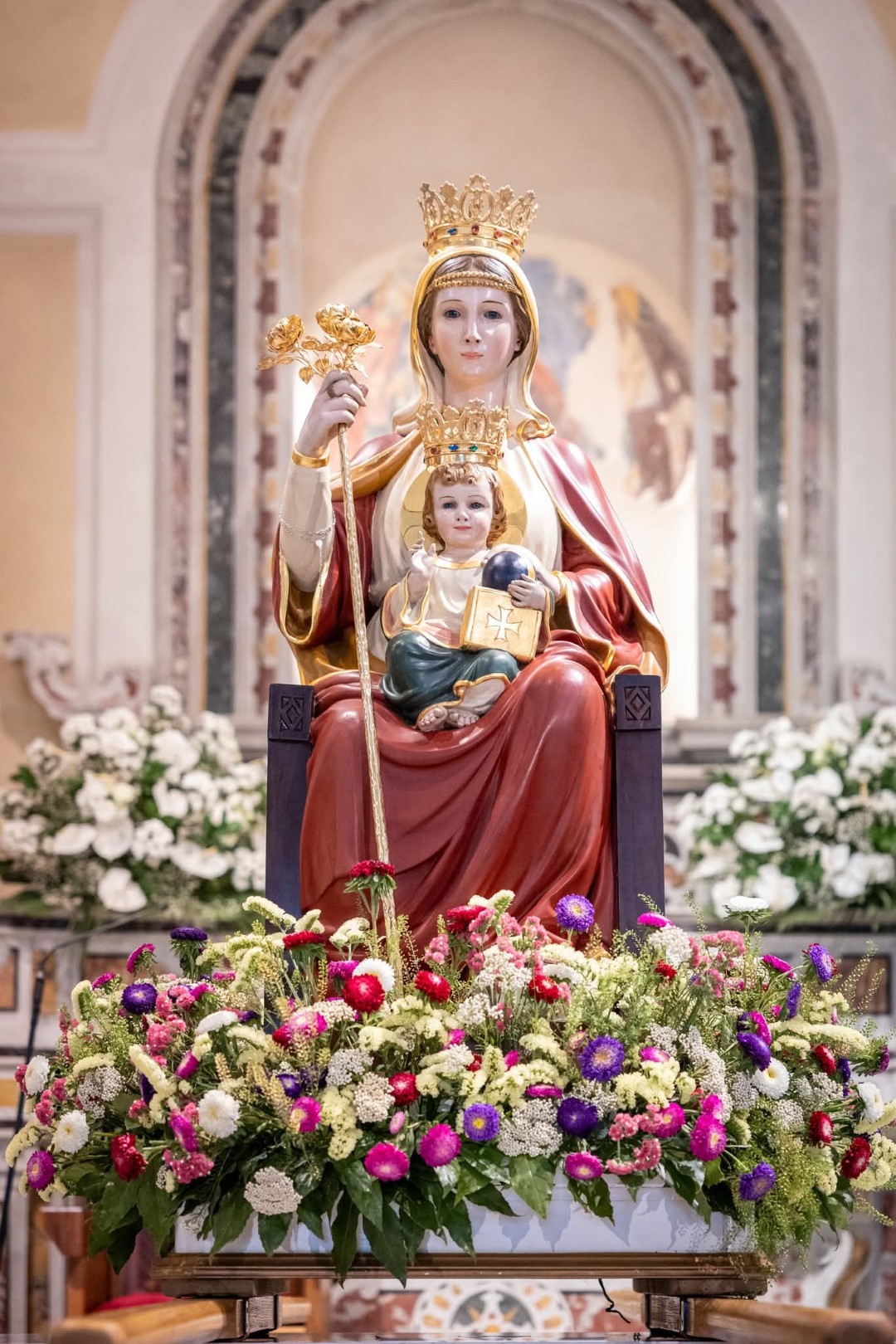
Every year, during the month of August, the community of Casarlano celebrates the Feast of Our Lady of Casarlano, dedicated to the Assumption of Mary.
The celebrations feature a religious program comprising a novena, solemn masses, and processions, alongside social gatherings that bring together residents and visitors, keeping alive a tradition that stands as one of the most deeply felt religious events in the Sorrento hills.