
The Feast of Sant’Antonino Abate is one of the most important religious and cultural celebrations in the city of Sorrento, deeply linked to history, faith and local tradition. Every year on February 14th, the day on which Valentine’s Day is celebrated in the rest of Italy, the community remembers the patron saint of the city, Sorrento comes alive with religious celebrations, processions and moments of popular aggregation that attract faithful, tourists and curious people from all over the Sorrento Peninsula.
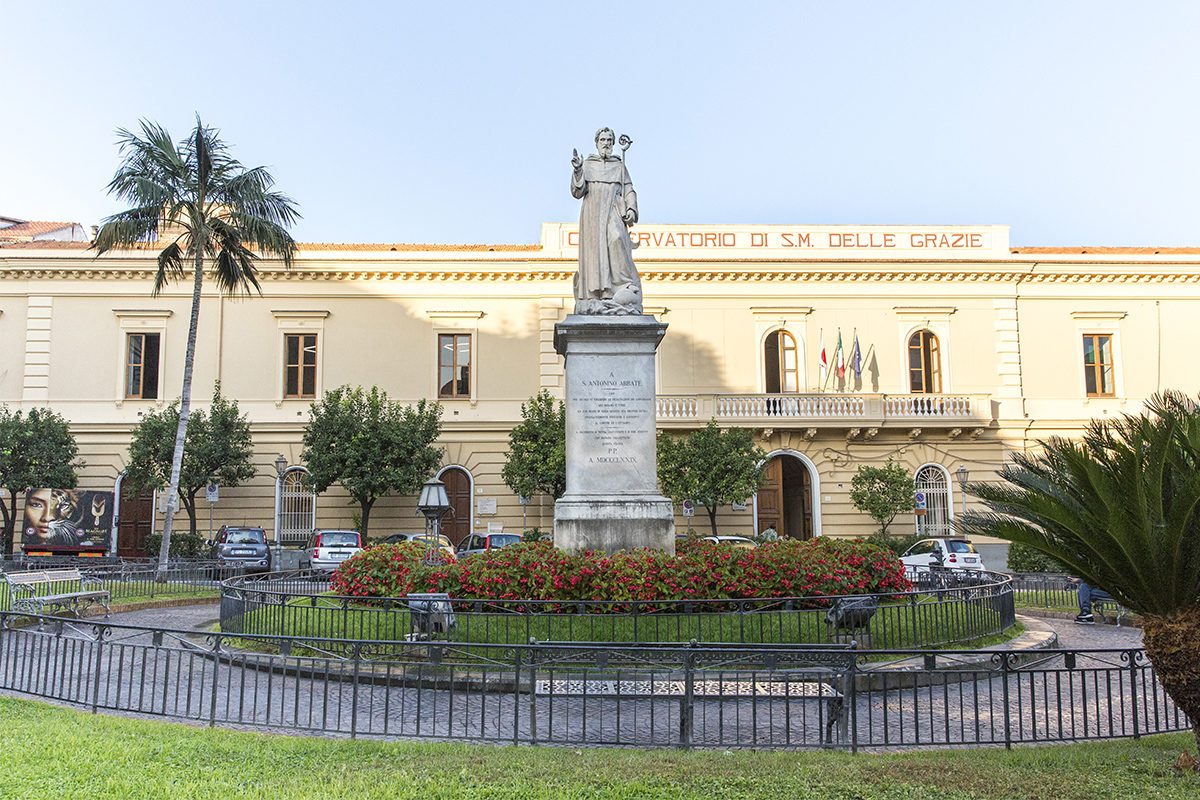
Who was Sant'Antonino Abate?
Sant’Antonino Abate, who lived in the 7th century, is venerated as the patron saint of Sorrento and co-patron of the Archdiocese of Sorrento-Castellammare di Stabia. His relics are kept in the Basilica of Sant’Antonino, one of the most significant places of worship in the city, built on the foundations of an ancient church that dates back to the first centuries of Christianity.
The figure of the saint is surrounded by numerous popular legends, including that of the miracle which sees him as the protagonist in the rescue of a young man swallowed by a whale, symbol of the protection that Sant’Antonino offers to the city and its inhabitants.
Feast of Sant'Antonino in Sorrento
The main feast of Sant’Antonino Abate falls every year on February 14, the day on which the community of Sorrento solemnly celebrates the saint with religious functions, processions and civic events. The anniversary also represents the symbolic start of the city’s tourist and social season, with numerous local activities starting in conjunction with these celebrations.
In addition to the fixed date of February, there is also another celebration linked to the saint: on the first Sunday of May Sant’Antonino “dei Giardinieri” is celebrated, a historical tradition linked to the protection of crops and local agriculture.
The main celebrations of February 14th
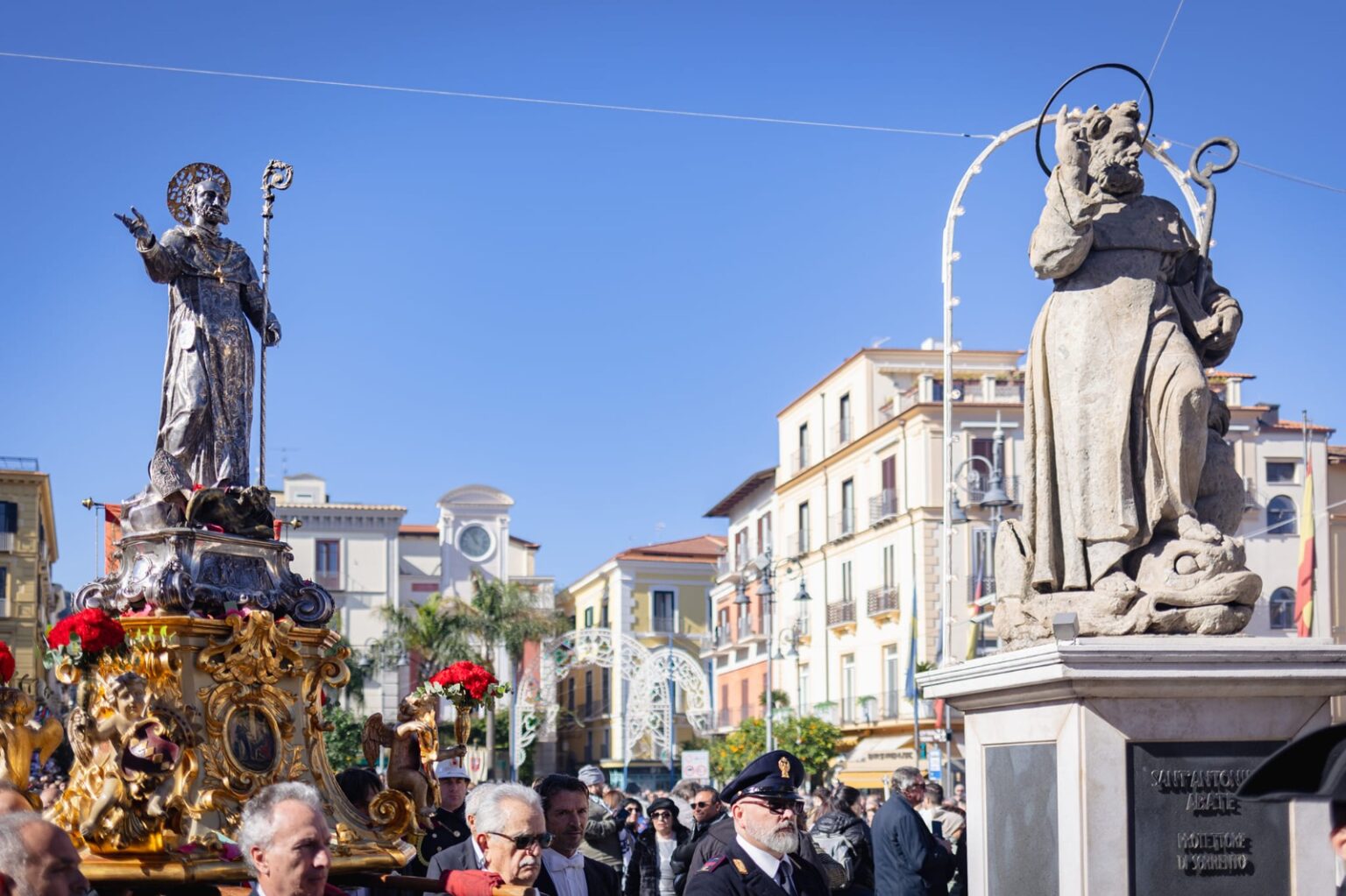
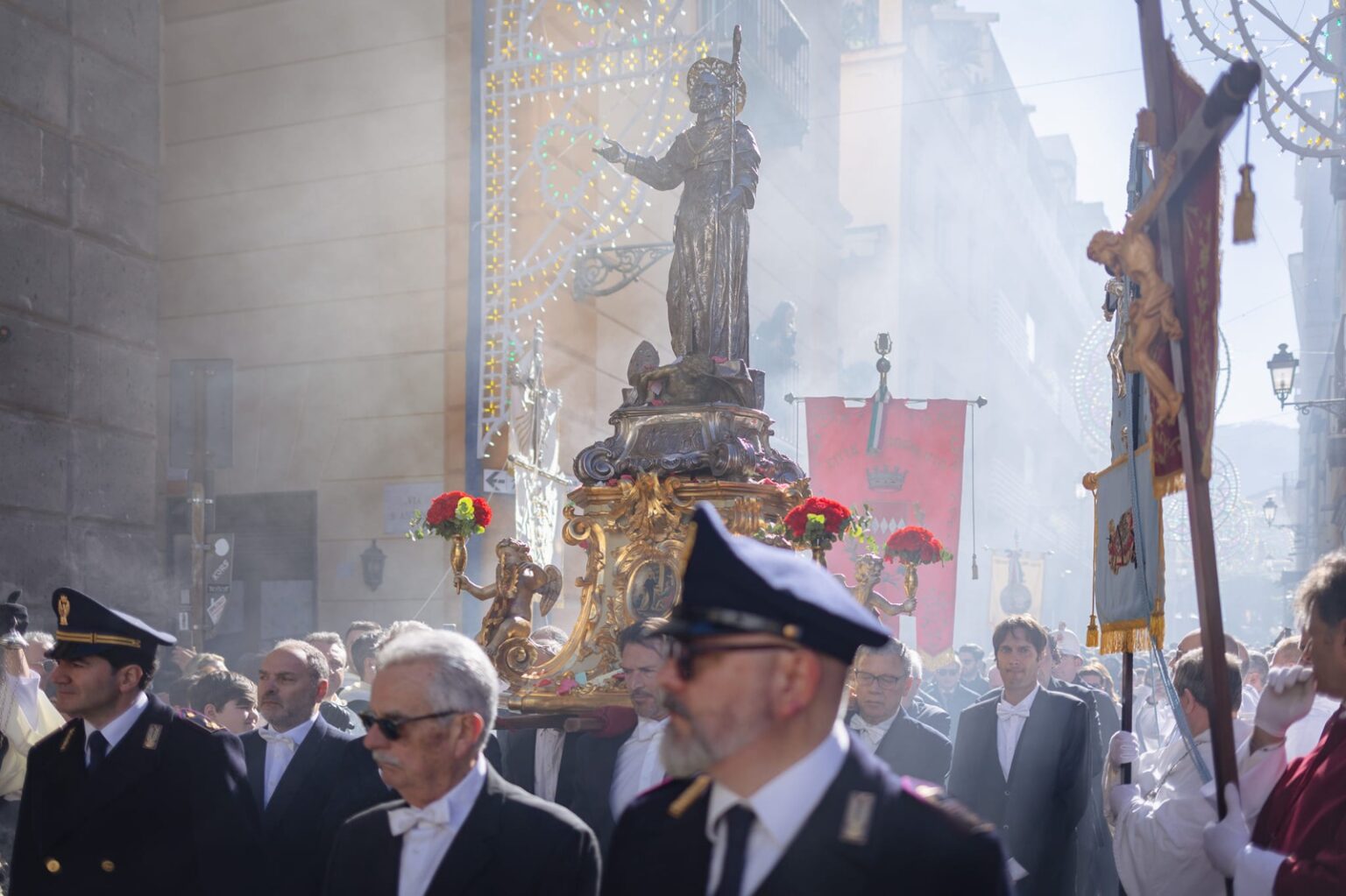
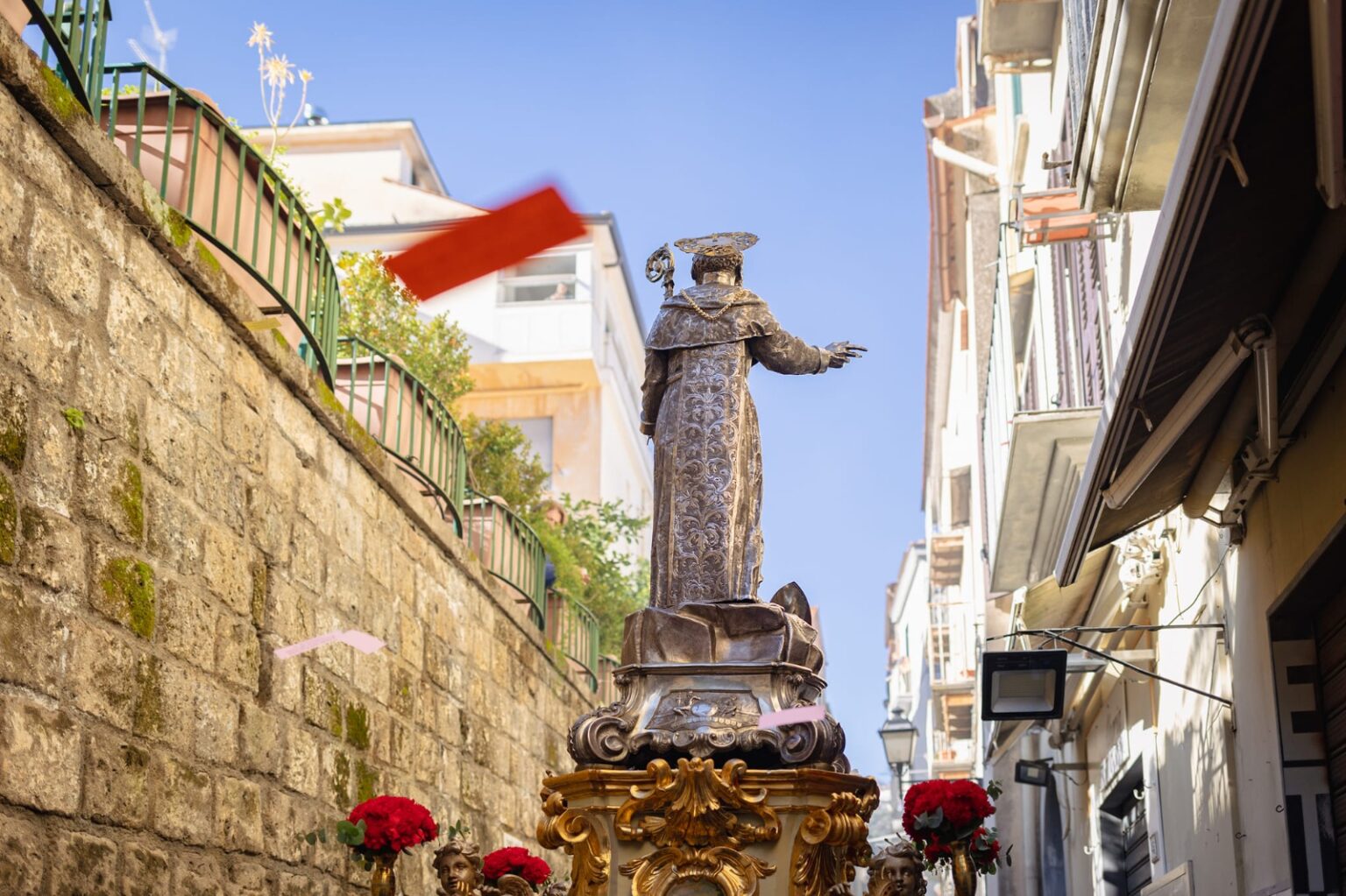
The public holiday of February 14th begins very early: in the Basilica of Sant’Antonino a first Mass is celebrated in the crypt, where the saint’s remains are kept. Subsequently, starting from around 9:00 am, the ancient silver simulacrum of Sant’Antonino is carried in procession along the historic center of Sorrento, accompanied by local brotherhoods, ecclesiastical authorities and devout citizens.
The procession, a rite of great symbolic value, culminates with a solemn Mass celebrated upon returning to the Basilica. During the day you can see thousands of people crowding the historic center, including visits to the crypt, illuminations, stalls and moments of civil celebration.
In addition to religious celebrations, Sorrento also celebrates its patron saint through moments of popular gatherings and civic events. The statue of the saint is honored by the religious and civil authorities with official ceremonies involving the entire community, including delegations from the twin cities and other localities in the region.
How to experience the patron saint's day
For those who visit Sorrento during the period of the feast of Sant’Antonino Abate, February 14th represents a unique opportunity to:
- witness the procession of the historical simulacrum
- participate in religious celebrations and solemn Masses
- discover local traditions and city folklore
- experience the festive atmosphere in the historic center with stalls, illuminations and popular meetings
The cult of Sant’Antonino is an example of how faith, history and culture are deeply intertwined in the daily life of Sorrento, making this festival not only a religious event, but also an identity heritage of the local community.
Legends about Sant'Antonino
There are numerous anecdotes and stories linked to Sant’Antonino.
A curiosity concerns the simulacrum of the Saint: what is carried in procession today is the second statue of Sant’Antonino, created immediately after the terrible incursion of 13 June 1558 by the Turks.
The original and very ancient effigy was stolen by the latter.
The Sorrentines were devastated by this theft, but determined to create a new one. However, they did not have the money to commission another one.
Here the miracle happened: an old gentleman showed up before the Neapolitan goldsmith with the sum necessary to pay for the new statue.
Only later was he identified as Sant’Antonino. And this is just one of the many myths, stories and miracles linked to the life of the Saint.
Saint Antoninus and the Whale
The most famous is certainly that of the prodigious rescue of a boy from a whale.
It is said that one day a boy playing on the beach of Sorrento was swallowed alive by a whale.
The desperate mother asked for help from Sant’Antonino who went to the beach and ordered the fishermen present to look for the cetacean and bring it into his presence.
When this happened, the whale was literally gutted and the boy emerged safely.
The Legend of Sant'Antonino a Priora
The hamlet of Priora, located on the hills of Sorrento, holds a deep devotion to Sant’Antonino Abate, patron saint of the city. In particular, the Arola farmhouse stands on a natural plateau dominated to the north-east by Monte Comune, while to the south the Lavinola stream and the Croce del Monaco mark the border with the Municipality of Piano di Sorrento. Since ancient times, Arola has been known for its healthy air, the presence of spring waters and the fertility of the agricultural territory, elements that have favored the development of a community linked to the sea, agriculture and the processing of dairy products.
The legend of Sant’Antonino and the prophecy of water
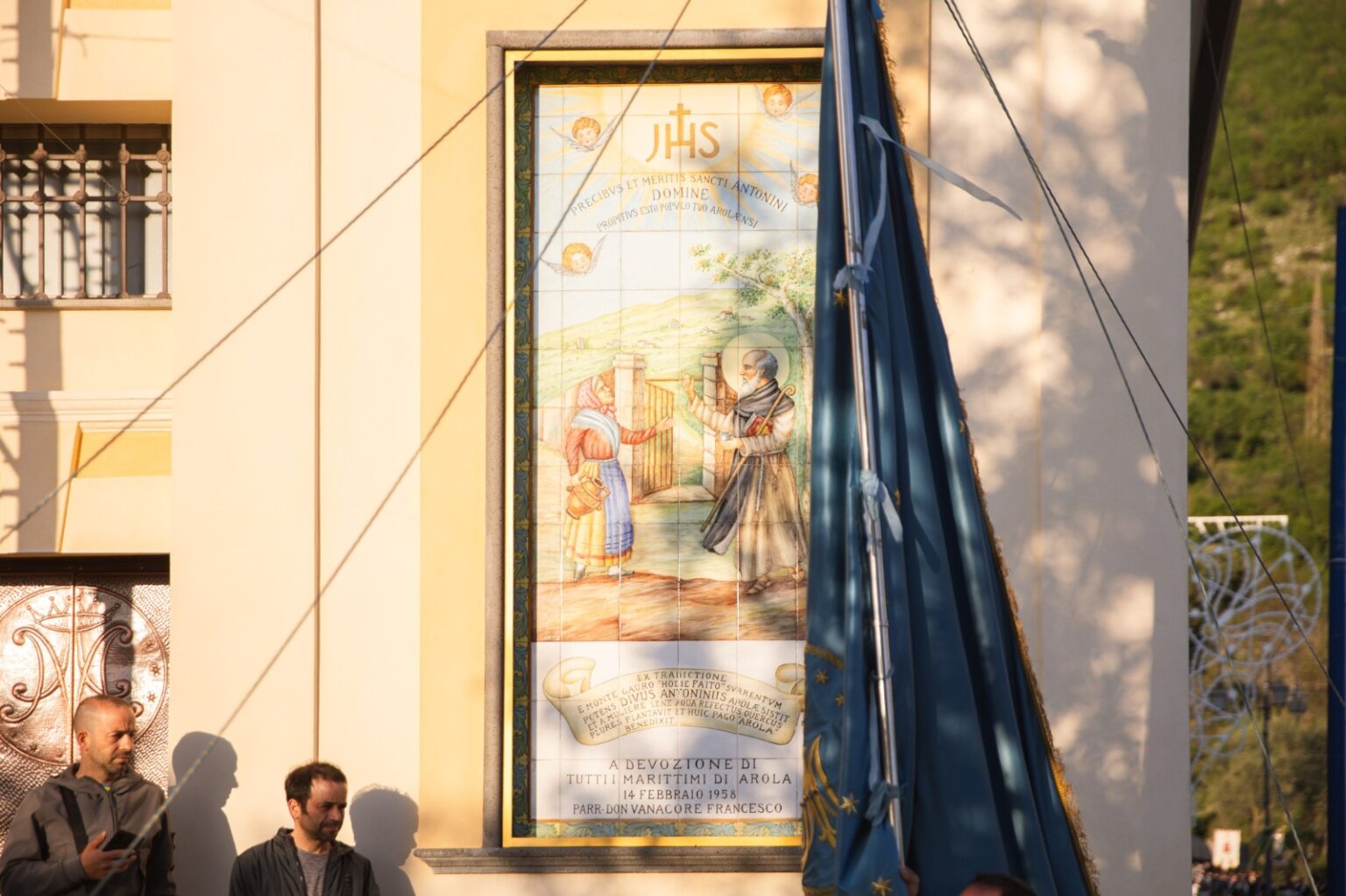
According to a legend handed down for centuries in local oral tradition, Sant’Antonino, during a journey through the mountains of the Sorrento Peninsula to escape the persecution of vandals, stopped in Arola in a period of serious drought. Thirsty, the saint asked the locals for water, without success, until an old woman from the farmhouse spontaneously offered him what she had. Struck by the gesture of generosity, Sant’Antonino pronounced a prophecy destined to mark the territory forever:
“Wherever you dig, you will find water”.
Even today, the persistent presence of springs in the area is considered a tangible testimony of this prophecy, strengthening the bond between the saint and the community of Priora.
The Church of Sant’Antonino in Arola
The heart of Arola’s religious devotion is represented by the parish church of Sant’Antonino, built on a plateau where two large oaks once stood, today remembered by a small monument wanted by the inhabitants. The church, equipped with seven altars of fine workmanship, is administered by a lay society and was consecrated on 6 December 1786 by the bishop of Vico Equense Paolino Pace. Even today it represents an important spiritual point of reference for the faithful of the hamlet.
Historical heritage and views of Priora
Completing the cultural and religious heritage of the area is the former 17th century Camaldolese Convent, located on the Astapiana hill, in Arola. The complex constitutes an interesting example of religious architecture and offers, from the square in front, a panoramic view of Sorrento and the entire Sorrento Peninsula. Access is by passing under a restored seventeenth-century tower, further historical evidence of the area.